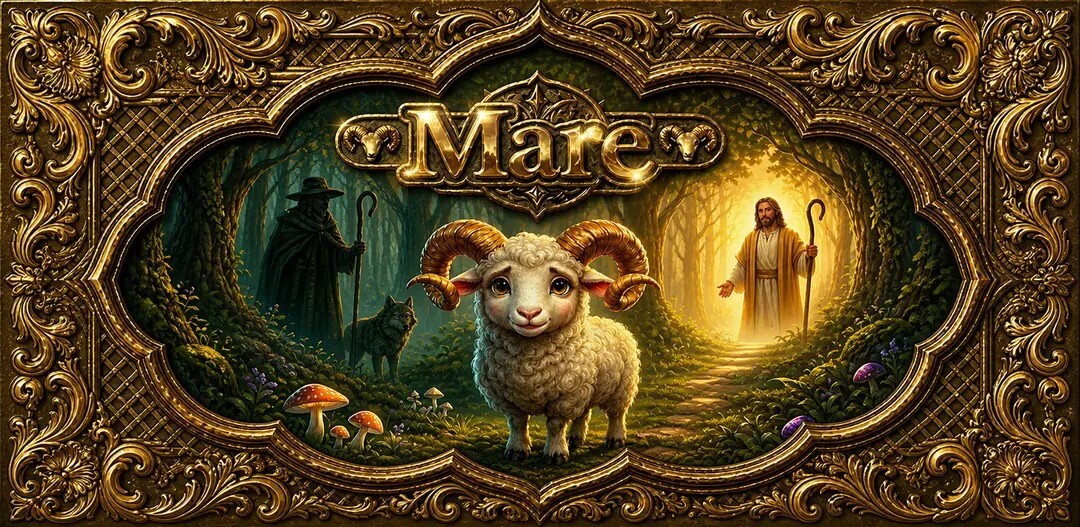
I didn't start this project with a business plan. I didn't start with a team, investors, or even the intention of creating seven different ways to make money. It started with eight pages of a story I wrote for my nephews.
Today, that same story has become a 134-page interactive book, a 2D game, puzzles, a coloring book, multiple book editions, digital products, and an app available through major app stores.
And AI played a major role in helping me build it.
“AI didn't build the business for me. It removed a lot of the friction between an idea and something I could actually ship.”
It Started in a Church
The idea came from somewhere I never expected: a church sermon.
The sermon was about the Good Shepherd searching for one lost sheep. Something about that story stayed with me.
When I got home, I turned the idea into an eight-page children's story for my nephews.
The next day, I read it to them.
Then I deliberately stopped halfway through.
I wanted to see what they would do.
They wanted to know what happened next.
That was my first validation.
“It wasn't a survey. There were no analytics, focus groups, or market reports. It was simply two children asking me to continue the story.”
At that point, I wasn't thinking about monetization. I just wanted to share the story with the world.
From a Story to an Interactive Experience
I didn't want it to remain just another text-based children's story. I wanted children to be able to enter the story.
Instead of simply reading what happened, they could tap the screen, interact with the characters, hear the narration, and watch parts of the illustrations come alive.
To make that possible, I first broke the story into 134 short lines, essentially creating one line of text for each page.
Then I designed an illustration for every page.
AI became extremely useful during this process. I used AI to help develop prompts, while Google Flow was used to generate the artwork.
The Character Consistency Problem
One of the biggest challenges was consistency.
If you generate a character repeatedly with AI, there is a good chance that the character will look slightly different every time.
So before generating the pages, I created pose sheets for the main characters.
Whenever I needed one of those characters in a new scene, I included the pose sheet with the prompt.
That small step made a huge difference. Instead of getting a slightly different sheep or shepherd on every page, I could maintain much stronger visual consistency across the entire story.
Creating and refining the illustrations alone took nearly a month.
So while AI accelerated parts of the process, it certainly didn't make the project happen overnight.
Then AI Helped Me Build the App
Once the illustrations were ready, the next challenge was turning them into an actual application.
I used AI coding tools to help build the app in Flutter, allowing the same codebase to target both Android and Apple devices.
But I didn't want the illustrations to simply behave like static images. I wanted the pages to feel alive.
So I separated the illustrations into foreground and background layers. Inside the app, the foreground elements could then be animated independently.
When a child taps the page, a sheep might bounce, wiggle, or react while the background remains still.
That simple technique transformed a flat illustration into something much more interactive.
I also added narration, background music, sound effects, and animation. The result was no longer just a digital book.
It had become an interactive experience.
Nine Languages
I also wanted the story to reach children beyond a single language. The app eventually included nine languages.
I used Google Translate as a starting point, but I didn't simply trust the machine translations and publish them. Native speakers reviewed the different versions to make sure the text still sounded natural.
“AI can help you move faster, but speed doesn't eliminate the need for human judgment.”
But There Was a Problem
After building the interactive book, I realized something: what happens after a child finishes reading it?
They might simply close the app and never return.
So I needed to give them another reason to come back. That's when the story became a game.
Enter: Run, Mare, Run
I turned the story world into a 2D game called Run, Mare, Run. Mare runs through the same world, dodging obstacles and trying to escape the danger chasing her.
The development process was surprisingly simple in concept:
Describe
I described what I wanted the game to do.
Generate
AI generated the code and helped turn the idea into something playable.
Test
I played it, found problems, and identified what needed to change.
Iterate
I asked AI to fix the problems, then tested again until it worked.
I also added more than ten image puzzles, several levels of word puzzles, and coloring pages.
The goal wasn't simply to make the app bigger. It was to make the world around the original story more valuable and more reusable.
Then I Asked a Different Question
At this point, I had a story, characters, illustrations, a complete fictional world, an interactive app, a game, puzzles, and coloring pages.
“Why stop at the app?”
That question changed the entire project.
One Idea, Multiple Products
The illustrations were already created. The characters already existed. The story had already been written.
So instead of creating everything from scratch again, I started looking for ways to reuse the assets I already had.
The first monetization option was the app itself with advertising and in-app purchases.
Part of the book could be experienced for free, while the complete experience and additional content could be unlocked through a purchase.
I already had all those illustrations. So why not turn them into a physical book?
From App to Amazon
I transformed the story into a standalone children's book and prepared it for Amazon KDP.
That meant dealing with formatting, margins, layouts, print-ready files, and the requirements of Kindle, paperback, hardcover, and translated editions.
I also created a standalone coloring book using the same creative world.
And Then Came the Shop
I still had artwork left, so I created another channel: a digital shop offering wallpapers, stickers, and art assets, connected directly through the app.
I was reusing the world I had already built.
Seven Monetization Channels
“I'm deliberately calling these seven monetization channels, not seven separate businesses.”
I didn't create seven businesses. I created one intellectual property ecosystem and found different ways to distribute and monetize it.
Is It a Big Business?
Not yet. And I'm not going to pretend it is. The revenue is still small.
The day after publishing, I got two sales on Amazon KDP. They weren't life-changing, but they were proof of concept.
Eventually, I connected the books and shop to the app and submitted the application to Google Play and the App Store. Eight pages written for two children had become a complete product ecosystem.
What AI Actually Changed
“AI didn't remove the work. It removed a lot of the friction.”
With AI, I could generate code, iterate on ideas, create assets, troubleshoot problems, and move from an idea to a working prototype faster. But human judgment, review, and care remain indispensable.
Build a World, Not Just a Product
Don't always think about building one product. Think about building a world.
What I Learned
Start With Something You Actually Care About
Personal connection and passion sustain months of iteration.
AI Doesn't Eliminate the Work
It accelerates drafting, but testing, judgment, and persistence are yours.
Build Reusable Assets
Single assets can yield apps, games, books, puzzles, and merchandise.
Think Beyond the First Product
Ask what else your existing work can become.
Expect Platforms to Push Back
Account for store policies, reviews, formatting hurdles, and delays.
Eventually, You Have to Ship
Put the product in front of real users and let the market respond.
From Eight Pages to a Product Ecosystem
It started as eight pages written after a sermon, followed by two children wanting to hear the rest.
Those eight pages became 134 interactive pages, animation, narration, music, nine languages, a 2D game, puzzles, coloring pages, books, translated editions, and digital products across seven monetization channels.
An idea doesn't have to remain the size it was when you first imagined it.
What else can this become?